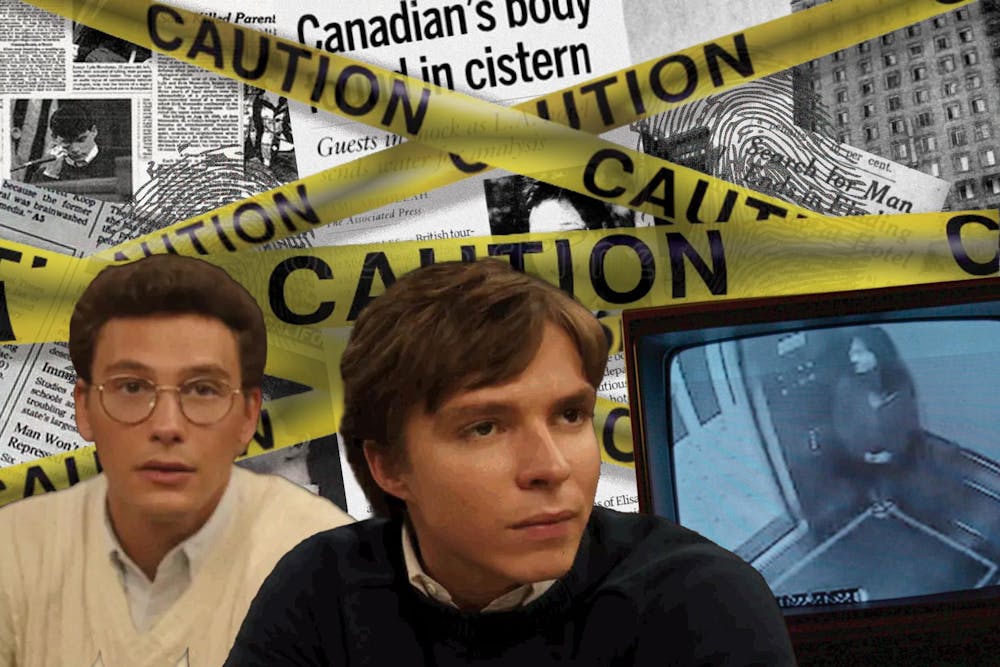
Every time I log onto Netflix — as if I ever watch Netflix with the number of readings I have for my Intro to Theology — I am always bombarded with bold letters convincing me to watch the interview tapes of a serial killer from the ’70s or the new investigation on some young woman. Don’t get me wrong. I’ve been listening to true crime since I was 13 — honorable mention to Crime Junkie with host and former South Bend resident Ashley Flowers. But fame around the genre has increased exponentially. From the popularization in the ’90s by “Dateline” to my introduction to podcasts seven years ago and now the active investigation of cold cases by “amateur sleuths.” Yet, as I listen to “Scotland Yard Confidential” or watch “The Vanishing at the Cecil Hotel,” I wonder: why are audiences so captivated by the most disturbing acts us humans are capable of? And by audiences, I mean me and other really weird people who have spent sleepless nights deep diving into the internet trying to figure out the connections between potential suspects and victims.
The true crime we know today began in 1966 with Truman Capote’s “In Cold Blood,” a nonfiction novel diving deep into the psychology of both victims and killers. However, the true mania for cold cases and madmen began in 2020 with the pandemic. For many, it went from a “guilty pleasure” to a strange source of comfort — weird how murder can act as a bedtime story for some. Analyzing patterns within the genre’s stories reveals the difference between the era before and after. Pre-pandemic was much more focused on “catching the killer,”, while the 2020 social justice movements drew more focus on examining police bias and legal corruption. Psychologists noted that people gravitated toward these stories because many have a solved ending; they gave a sense of order in a world out of control and even allowed people to feel the adrenaline of the danger from the safety of their own homes.
Since the lockdown of the century, the internet has reshaped engagement with active and cold cases. Platforms like TikTok and Reddit exploded with people using their free will to analyze clues, trade theories and even influence real-life investigations. With the curiosity for solving crime, streaming platforms like Netflix have seen this “true crime boom,” setting a new industry standard for bingeable deep-dive investigative docuseries. Roughly around 48% of U.S. subscribers and 60% of Canadian audiences engaged with the genre in 2024. During that same year, the genre claimed 15 spots on the top 20 documentary titles, up from just six in 2020 (I guess I am not the only crime junkie in the field). Because of this, producers would rather invest in unscripted, generally cheaper, high-return documentaries rather than big-budget scripted dramas. Yet, as there always is when it comes to money, there is some ambiguity about the intent and integrity.
This “true crime boom” has brought Netflix significant ethical dilemmas regarding victim exploitation and legal risks. As of 2024, over 20 defamation lawsuits have been filed in the United States against Netflix. Under current U.S. law, victims and families have no legal right to be notified or consulted before their case is turned into a production, as court documents are public records. Along with the legal aspects, the core ethical conflict lies in turning real-life trauma into “bingeable” entertainment for profit. Families report feeling powerless and retraumatized by sometimes inaccurate or sensationalized portrayals, often finding out about shows only after they premiere. What I personally find to be the most disturbing aspect is the humanization of the perpetrators. Shows like “Monsters: The Lyle and Erik Menendez Story” faced backlash for “glorifying” killers, prioritizing their backstory over the commemoration of the victims. This later influenced audiences’ misinterpretation of the criminals, eliciting pity or even attraction toward their characters on screen.
Although true crime media has negative consequences, it also has the potential to have a positive impact. Works like “The Innocence Files” or “Making a Murderer” have highlighted systemic flaws and prompted calls for legal reform or re-examinations of cases. This is seen in recommendations for resentencing decades-old cases due to increased public pressure, such as viewers who saw Lyle and Erik Menendez’s show. Somehow, hot people always get fans, like Ted Bundy with his charming personality and great smile (I disagree, but I guess women in the ’70s really loved his lawyer-like arrogance). I mean, true crime obsessed, please stop making edits on TikTok featuring Richard Ramirez.
The true crime community has grown exponentially, making people more aware of their surroundings and slightly paranoid. Please, people, lock your doors! We are not in Stars Hollow, Connecticut. As for mass murderers and serial rapists, there is still a lot of work to be done. Cases are still cold, families are still in the dark, and victims are reduced to a single file inside a dusty box inside the local county. Law enforcement needs tips, podcasts need streams, and even dramatic and slightly inaccurate Netflix documentaries make noise. Monsters are out on the loose; they could be your neighbor, your ex-boyfriend or even your dad (Dennis Rader’s daughter, Kerri Rawson, has even become an advocate for trauma victims). And as writer, entrepreneur and my favorite podcaster, Ashley Flowers says in her No. 1 true crime podcast globally, Crime Junkie: “Be weird, be rude, stay alive.”