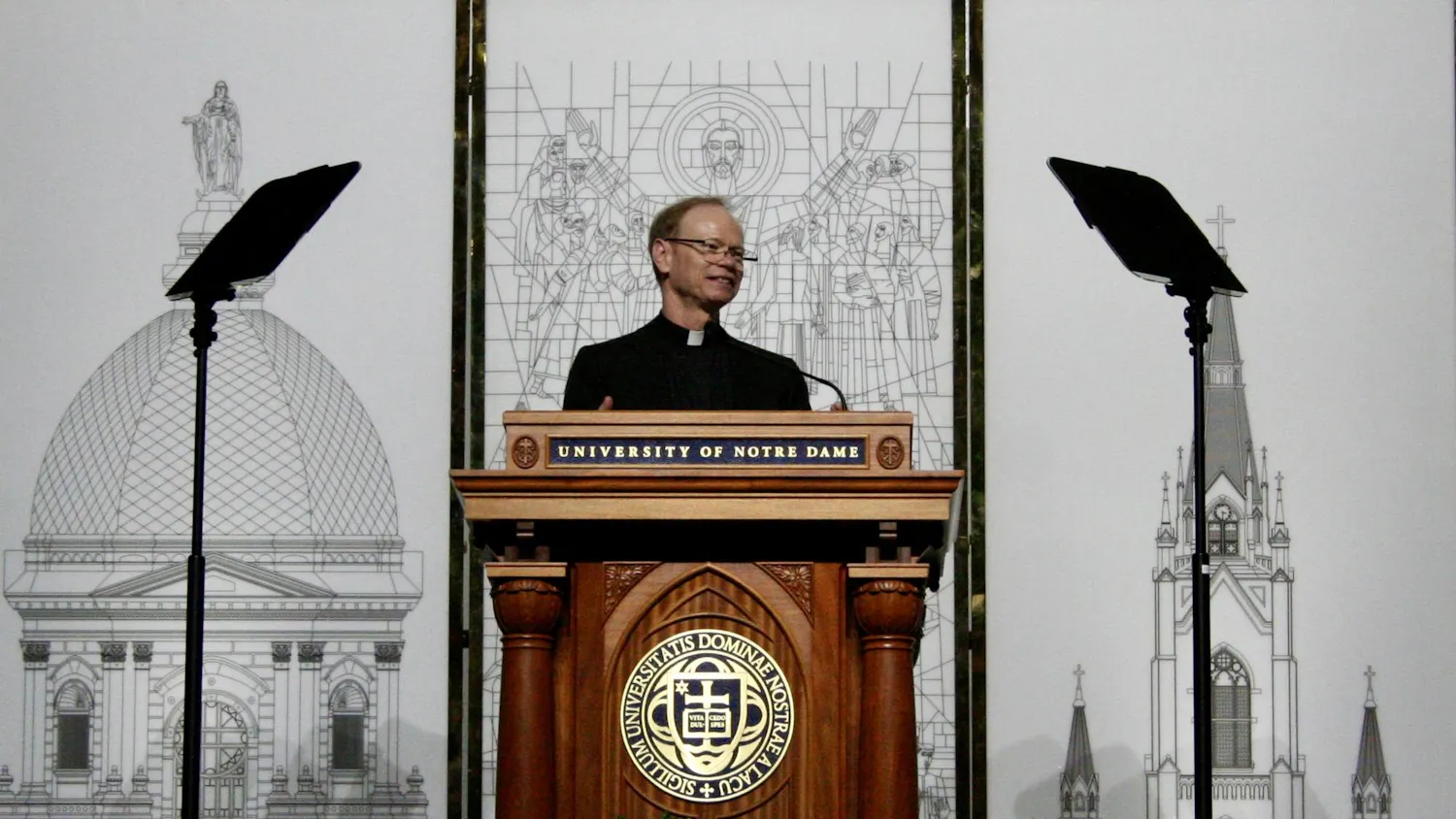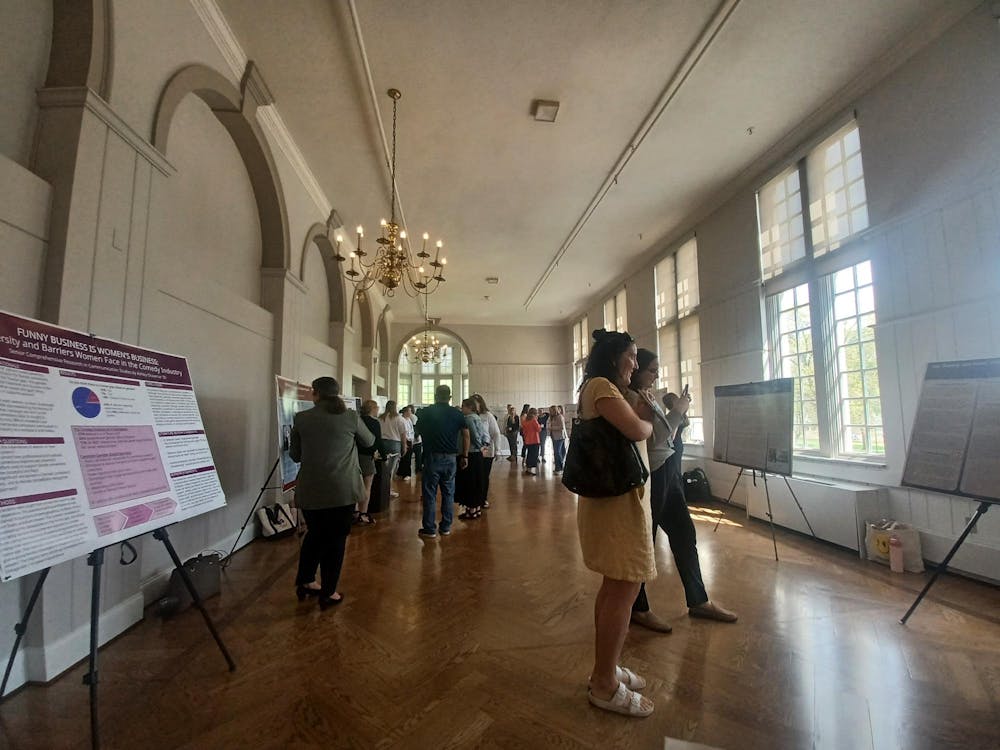
Saint Mary’s hosted their annual research symposium May 1–2 with a scholarship showcase in the Cushwa-Leighton library at 4:30 p.m. The full kickoff of the symposium began at 5 p.m., with different students presenting both art and literature displays.
From 10 a.m. to 5 p.m. in Regina Hall and Haggar College Center, students presented their research projects that they have worked on throughout the year on topics ranging from health sciences to social concepts. Five panel sessions were held throughout the day on 45 to 90-minute intervals where students could sit in and listen to different presentations.
Senior Molly Minick presented with three other students at the first panel session on “Indigenous Identities in the 21st Century” with Nell Haynes, an assistant professor of global studies. Her presentation explored “Alaska Native education and the Perspectives on It.”
Minick explained that her personal background as an Alaskan and her understanding of what education looks like in Alaska inspired her research. Because her father works at the Sealaska Heritage Institute’s Tlingit Culture, Language and Literacy program, she was able to contact people working and structuring Alaska Native education for her research.
“My main research was interviewing and talking with individuals who were involved in it, because there is a performance gap between Native and non-Native children in education in Alaska. My questions were, ‘Why is there this gap? What's being done to close this gap?’ A lot of that is centered around making Indigenous knowledge and Indigenous education a priority,” Minick said.
Minick said that she met with the coordinator of Native student success at an Alaskan institution to further understand what success looks like for Alaska Native students.
She hopes that students can understand the value of knowing the community they surround themselves with. She expressed that “even if you’re not going to work in what you’re learning about … it’s important to understand anyway.”
After graduation, Minick will pursue a master’s degree in Arctic and northern studies with a concentration in Arctic politics and policy from the University of Alaska Fairbanks.
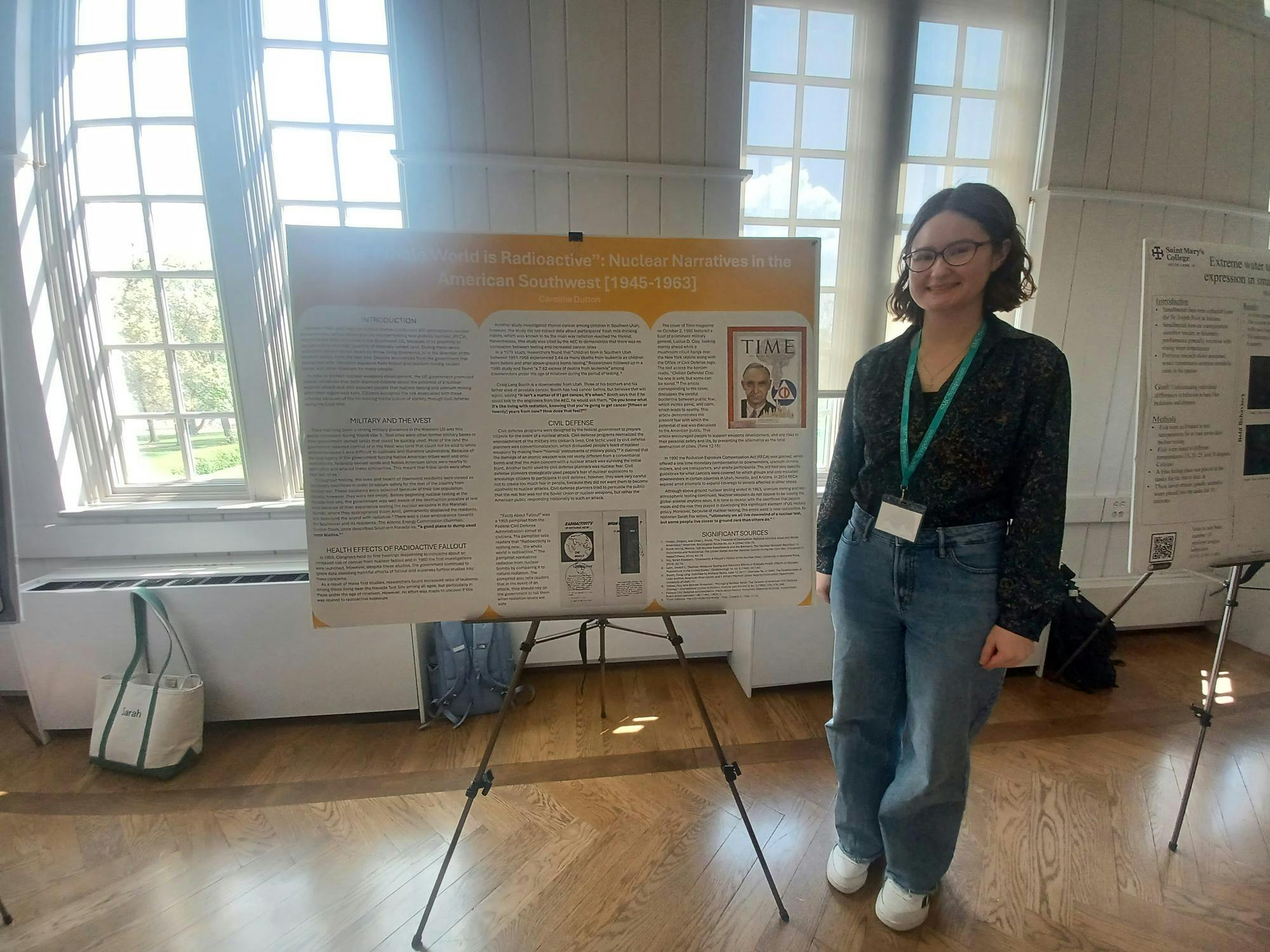
Senior Caroline Dutton presented at the fourth panel session in Haggar College Center on “‘The Whole World is Radioactive’: Nuclear Narratives in the American Southwest [1945-1963].” She worked on this project for her senior comprehensive project within the history department.
Dutton said that her research was about the negative health effects of nuclear testing. She compared the effects to the narrative that residents were given by the government, as individuals living near testing sites were told they were safe.
She began developing the project in August with Jamie Wagman, a professor of gender and women’s studies. Dutton looked through materials produced by the government to examine how it portrayed nuclear war to the general population.
“The most interesting part to me was getting to look at civil defense materials and all these different ways that the government was talking about nuclear war. In my opinion … they were trying to scare people basically,” Dutton said.
Dutton said that this research helped her to refine her academic interests and guide her future endeavors. After graduation, she hopes to pursue work at a museum or in education.
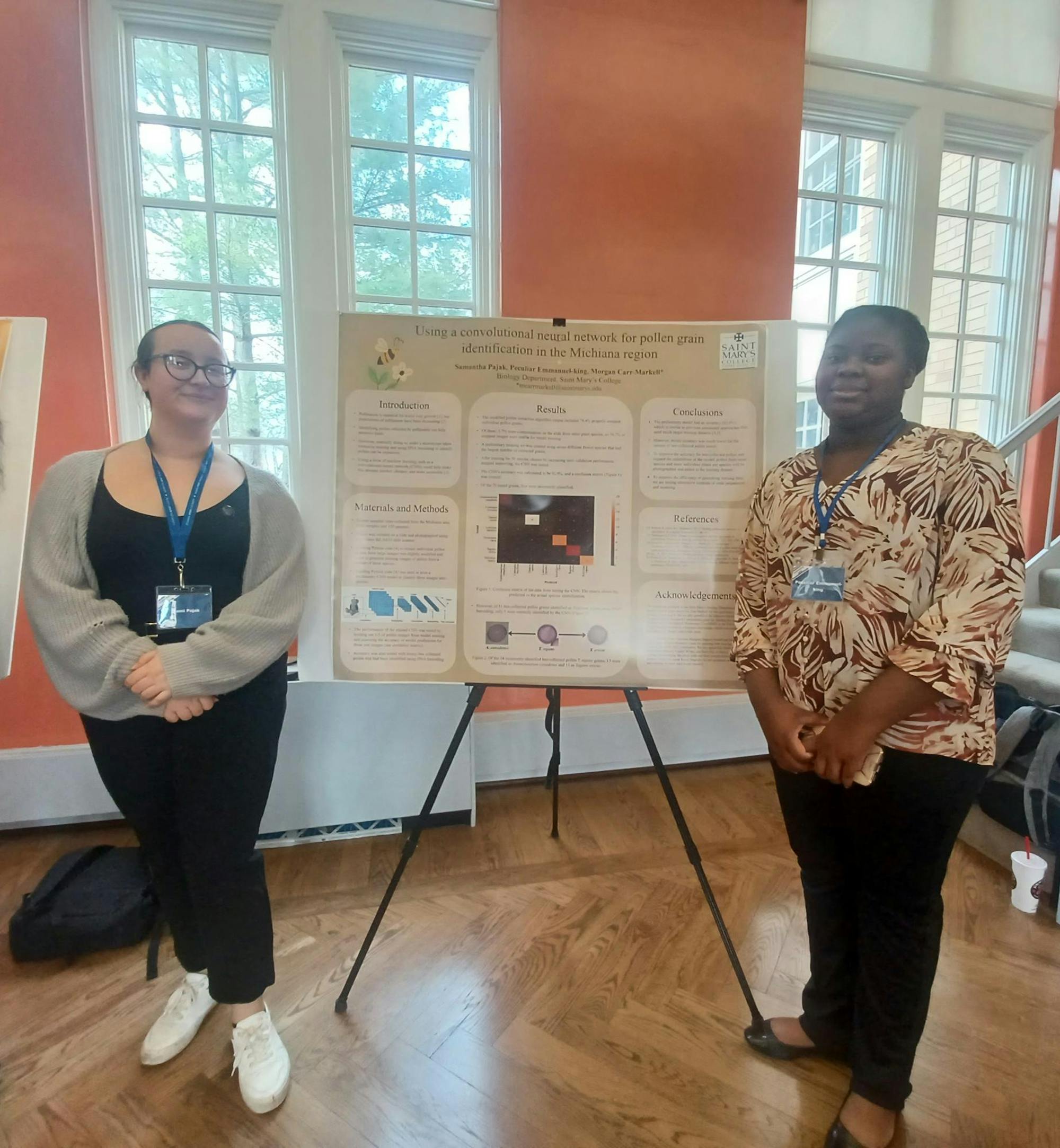
Senior Sami Pajak and sophomore Peculiar Emmanuel-king presented a biology project titled “Using a convolutional neural network for pollen grain identification in the Michiana region.” They worked with Morgan Carr-Markell, an assistant biology professor, to observe how machine learning can be implemented in biology.
Pajak shared that throughout the research, the most interesting aspect was looking at the application of different pollen into various plants.
“It was really important for me to keep track of it early on what was important for putting into my senior research proposal and my report … What I found really interesting in my research was just how different and unique pollen for all these different plants were. I’ve looked at hundreds of different pollen grains themselves over dozens of species and just seeing how different they can be, even within common species that are pretty closely related … was really incredible,” Pajak said.
She hopes that students can see the positive benefits of using artificial intelligence for conservation efforts. She also hopes that her research lessens concerns about the growth of AI overall and inspires other future biologists to further develop this topic.
“I think the research symposium is a great way for students to be able to show the research they’ve done. For biologists, we have our own research presentation day, but not all majors have that … Being able to have this space to be able to share what they’ve learned and what they’ve found, I think is wonderful,” Pajak said.