I lived with a New York City finance bro this summer who checked off all the typical intern-in-the-city requirements: gray Patagonia vest, khaki chinos, three desktop monitors for elaborate Excel spreadsheets and a commute to FiDi.
He lived in the second room of my subleased Lower East Side apartment. We shared a bathroom and for most of the summer got along fairly well. However, somewhere around the heat wave in late June, things began going awry.
He, who shall be referred to as “room two,” began to leave rotting food to stink in his room, never cleaned the bathroom riddled with hair, fell ill with a mysterious sniffle and argued that were all going to perish quicker than his bananas.
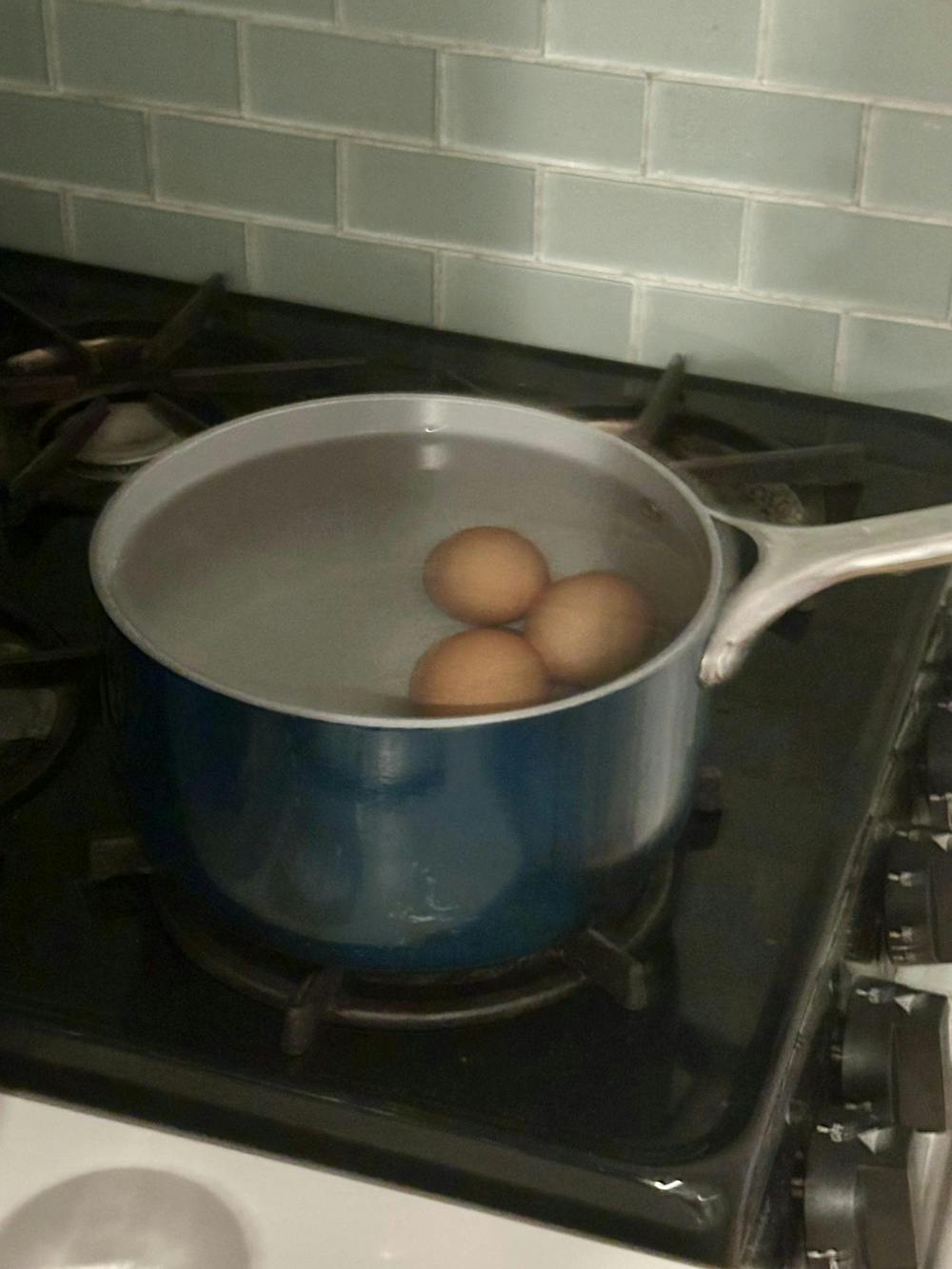
One day, I was eating cheese pizza with Zora Rodgers, fellow New York City intern, tenant of room three and opinion columnist for The Observer. Room two walked into the kitchen to check his pot of hard-boiled eggs, left to overflow and boil for one hour.
He removed the lid, and steam billowed, filling the already hot apartment with the stench of egg. He looked at me and Zora.
“Did you guys see we’re going to die tomorrow?” room two asked.
Zora and I looked at each other. “What?” we said in unison.
He pulled out his phone and opened TikTok. I couldn’t help but roll my eyes.
He showed us many TikToks of Israeli Prime Minister Benjamin Netanyahu saying, “Today, it’s Tel Aviv. Tomorrow, it’s New York.” All of the posts were deeply edited, showing bombs dropping in Manhattan and obliterating the nearby boroughs.
Room two insisted that Iran’s leaders were going to bomb Midtown.
From all of the posts he showed us, it became clear: he was so tuned in, he was tuned out.
He asked what The Wall Street Journal was saying, anticipating I would confirm his wild claim. I said that he was, of course, misinformed. I explained the reporting I had read earlier in the day and his misunderstanding between Israel and Iran.
He then awkwardly, somewhat embarrassingly, laughed and took five overcooked eggs into his bedroom.
When he left, I wondered how he, a 21-year-old with a competitive banking internship, trusted a meme page for critical pieces of news.
I, too, get news from social media. And I know online accounts are one of the main sources of information for many people, not just Gen Z.
A study by McKinsey found 34% of people under the age of 24 check reliable news websites, and 39% of young readers prefer social media. Another survey from news app SmartNews found that 65% of Gen Z news readers say they usually or always question the accuracy of a news story.
I know that some of my peers are weary of legacy media and traditional news outlets, instead turning to smaller channels. Others I know have started consuming news from legacy outlets more frequently since the eruption of political events last summer and international conflicts in the past few months.
Therefore, I think Gen Z is entering a bifurcation of digesting news. I think our generation now consumes news through a lens of caricatures: either stories from established outlets seen as authoritative or social media posts that are more engaging.
There is skepticism across the board, and for many, there is no North Star.
Perhaps more young people are online and trusting alternative forms of news, on the basis that if even legacy print publications aren’t reliable, then we should turn to a more diverse array of publications and take everything with a grain of salt.
And as a result, of course the more attention-grabbing content eclipses the accuracy and magnitude of current events.
Globally, the average member of Gen Z spends roughly seven hours a day on their phone. Gen Z also consumes news from social media more than other generations and consumes less news from traditional outlets than any other generation, according to the American Press Institute.
I, too, scroll through social media for the most attention-grabbing pictures and videos, even if they are memes of the news. I have certainly believed misinformation at certain times. But I wish my peers could see the lens of social media algorithms for what they are — competition for engagement.
Last year, I similarly wrote on how Gen Z should be more serious when viewing political figures — that digesting complex, grave current events out of context is concerning.
Of course, this phenomenon isn’t new. Fear mongering and dramatic posts on social media are meant to draw interaction and open the algorithm’s revolving door. We are susceptible to spiraling and being locked in for hours.
And, in doing so, we can forget about our boiling eggs and spoiled bananas.
Redmond "Reddy" Bernhold is The Observer's opinion editor emeritus and a senior studying biochemistry and journalism. He originally hails from Minster, Ohio but calls Siegfried Hall his home on campus. When not writing, he explores South Bend coffee shops and thrift stores. You can contact Reddy at rbernho2@nd.edu.