This article began writing itself in my brain when my friend asked me in all seriousness if Indians, when they encountered a cow, stopped everything they were doing to bow down and worship. I answered with a loud laugh that clearly said: “You are being so ridiculous right now!” The answer, just in case you were wondering, is no: All Indians do not worship cows because India is a religiously plural country.
This article essentially wrote itself more than two years ago, growing louder in my brain until some said with real surprise, “but I thought the caste system was legal in India!” It’s not. This article demanded to be published when people asked me if there were snakes where I lived. I was on the seventh floor of an apartment in a major metropolitan city. The same feeling arose when best friend told me her classmates assumed India was a dirty place, even dirtier than the streets of downtown Los Angeles.
This article is for all of you, who are outsiders to my culture. It’s for all of you who actually know very little but boldly assume too much.
1. Do you speak Indian / Hindu?
I do not speak Indian, just like you do not speak American. I also do not speak Hindu. A “Hindu” is someone who practices Hinduism as their religion.
And to most of you who are a little more educated about India, I do not speak Hindi! My mother tongue is Malayalam.
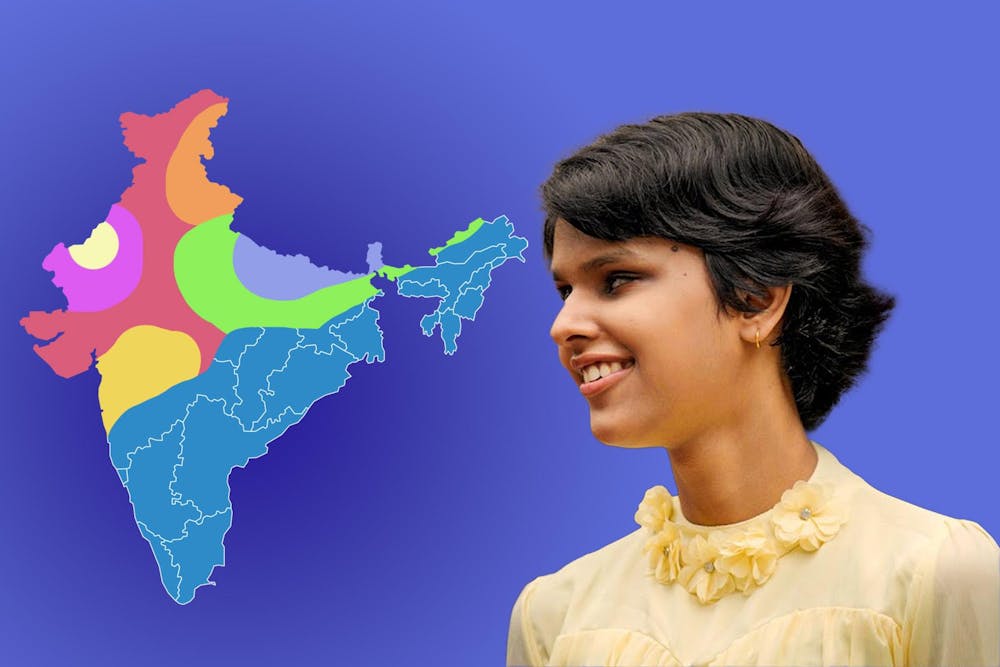
You probably did not know that India is a linguistically plural country. The Indian Constitution recognizes 22 languages. Respecting this linguistic diversity, India chose not to designate any one language as the national language.
But the politics of language in my country are not as straightforward as you may think. Historically there have been tensions between speakers of different Indian languages. Generally, we South Indians tend to get a little riled up when outsiders assume we all speak Hindi. But even while these tensions persist, I am proud of the commitment made by the makers of our constitution to respect and protect all Indian languages, a commitment that continues to be upheld by the Indian legal system.
2. You are so wrong about Bollywood.
When you think of Indian movies do you picture two lovers dancing together in the rain for no apparent reason? Do you picture the fearless hero who beats up a hundred villains single-handedly? Do you picture these things and tell yourself with a proud, cultured smile, “This is Bollywood! This is Indian Cinema!” If so, I am here to tell you gently, but also condescendingly, you are so wrong.
Bollywood is not a genre. It is just a catchy word used to describe the Hindi language film industry. Although Bollywood is the largest film industry in India, we also have Tollywood, which makes films in the Telugu language, or Mollywood, which makes films in Malayalam and so on.
What most outsiders understand to be Bollywood films actually belong to the genre that Indian film critics have termed “masala films.” In a masala film, everything is larger than life. These movies are often made on a large budget, and perhaps because of this, they become representations of Indian cinema to the outside world.
But the beauty of Indian cinema is not confined by the limits of larger-than-life stories. If you are looking for a delightful romp of a movie that perfectly captures the joyousness of youth, please watch “Bangalore Days.” If you want to torture yourself with a thriller that will give you nightmares, watch “Anjaam Pathiraa.”
If you are ready to step into the ocean that is Indian cinema, watch “Srikanth,” “Tourist Family,” “KGF” and “Laapataa Ladies.”
3. Unfortunately, not all Indians eat naan and chicken tikka masala.
If you have gotten to this point in the article, you might have realized that a country with multiple languages and film industries cannot confine itself to a singular food preference. In general, South Indians prefer rice or rice-powder dishes with vegetarian or non-vegetarian curries such as rasam or beef ularthiyathu. A lot of North Indian states prefer wheat flatbreads such as chapatis accompanied by curries such as daal makhni or chicken vindaloo.
But the diversity of Indian food tastes is something that extends beyond the differences between North and South Indian taste preferences and something that I cannot try to capture even after 18 years of living in India.
All I’ve got to tell you, though, is the next time you see large bowls of chicken tikka masala at South Dining Hall, of course appreciate the dining hall for diversifying its food options instead of sticking to American staples. But also, just think about all the Indian dishes you are missing out on, all the curries that will never make your taste buds sing for joy.
Oh, I feel so sorry for you!
I don’t expect you to know or love India in the same way that I do. After all, three years of life in the U.S. still makes me feel clueless when American pop culture references are made in conversations.
I just wish people would not hold onto assumptions that are untrue or half-truths, choose not to put my country into a monolithic narrative of their own creation.
When you confine India’s chaotic diversity into a few stereotypes, you unconsciously impose your own beliefs of what a country should be onto mine.
All I ask is for you to have the grace to admit that you don’t know the real India because you have never lived in it. All I ask is for you to have the humility to admit that you will never fully be able to know India because a country like India cannot be fully known even by those who belong to it.
Hannah Alice Simon was born and raised in Kerala, India, and moved to the U.S. for college with the dream of thriving in an intellectual environment that celebrates people with disabilities. On campus, you will mostly see her taking the longest routes to classrooms with her loyal cane, Riptide, by her side. She studies psychology and English with minors in musical theatre and theology. You can contact Hannah at hsimon2@nd.edu.