On my first official day off in India, I visited a leprosy colony. I know when I say “leprosy,” it likely evokes images of a biblical-era disease — something gruesome, something deadly. The stigma surrounding leprosy, or Hansen’s disease, is overwhelming, when in reality, it is a completely treatable and curable illness. Although India’s leprosy rates have been rapidly declining in recent years, it still accounts for a large majority of the global burden. Its prevalence among the impoverished and unhoused populations still warrants the existence of leprosy communities and colonies, although their need is readily diminishing. Soon, with enough luck and proper public health measures, leprosy should truly become a disease of the past.
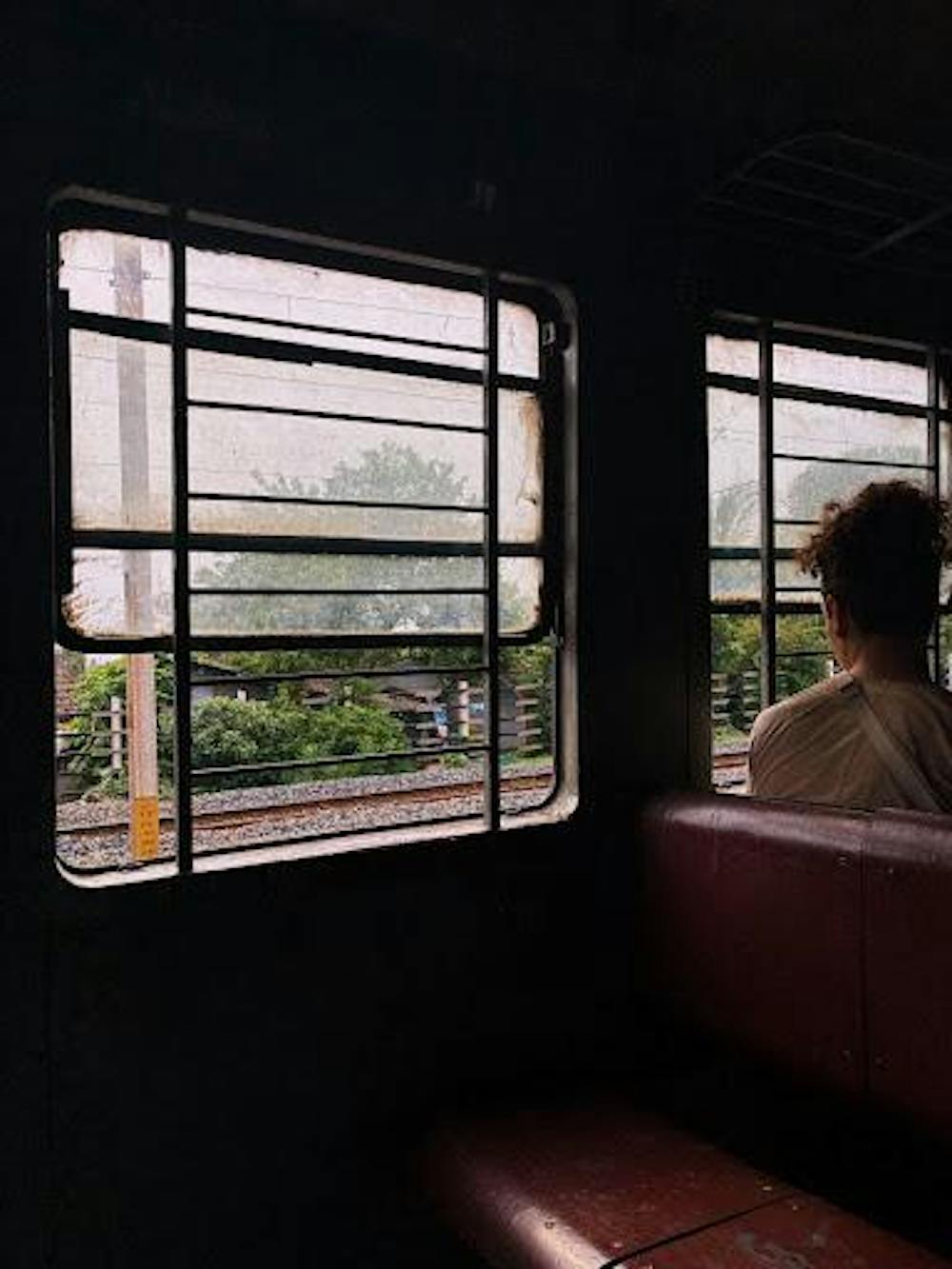
So when I was offered a trip to visit one of the last remaining Missionaries of Charity leprosy colonies during my summer fellowship in Kolkata, of course I said “yes.” The Brothers of Charity, a branch of contemplative MC brothers, ran a colony in Titagarh which was an hour-long train ride from my hostel. After navigating several buses and an incredibly crowded train station, I was on my way, accompanied by several other volunteers. Being able to see the urban sprawl of Kolkata give way to verdant forest from my seat on the open-air train was remarkable, and the air already felt fresher. Soon enough, the train pulled into a platform nestled in between two clusters of villages, where I hopped off directly onto the tracks. The leprosy colony campus stretched along the edge of the tracks, a remarkably bright blue set of buildings that seemed to almost blend into the sky. The door at the front was constitutively open, and a brother stood at the door, awaiting our arrival.
Brother Raphael was to be our tour guide for the day. He asked us to sign into the guest book, reminded us to spray an extra round of insect deterrent and immediately began the tour of the facility. He first led us into a dimly lit corridor, where dust particles highlighted the streams of light coming through the windows. As I crossed the threshold, I was immediately met with what sounded like a resounding heartbeat echoing against the walls. As my eyes adjusted to the light, I realized I had entered a room full of massive analog looms. Two rows lined the walls, one woman sitting at each loom, all deftly passing their shafts and heddles between hands without conscious thought. I recognized the woven cloth each was producing — it was the trademark white sari with blue stripe that distinguished the Missionaries of Charity sisters. Brother Raphael walked us through the looms, and women stopped their work to pause and say “namaskar,” greeting us with folded hands. As I began returning the gesture, I noticed that some of their namaskars were incomplete; most, if not all, of the women were missing digits and fingers.
The debilitating characteristic of Hansen’s disease is not necessarily the sequelae of the infection itself, but rather how the lack of sensation changes how a patient treats the affected region. While nerve damage occurs due to the disease, most of the actual damage comes from self-inflicted injuries. When an individual has no sensory perception of their fingers, they don’t feel any pain, which then leads them to neglect protecting their appendages. For example, one woman we encountered in the colony had walked with a shard of glass lodged in her foot for weeks without knowing — her pain and alert wasn’t there, so she had no way of knowing she was injured.
This disability, along with the devastating stigma surrounding Hansen’s disease, renders most patients virtually unemployable in regular society, further propagating a cycle of inequity and stigma. That was one of the main missions of the Titagarh colony: providing a supportive community and a source of income for patients. Most of the residents of the colony had already recovered from Hansen’s — there were only a handful of patients in the medical ward receiving active treatment. Most of the colony was focused on fostering a normal life.
As our tour continued, we wove through gardens, stables and a fishery. Two highly skilled Hansen’s survivors had established themselves as the residential cobbler and prosthetics designer, creating functional footwear and orthosis devices for the rest of the members of the community. Brother Raphael beamed and shook their hands as he walked in. Their workrooms highlighted pictures of previous “happy customers,” framed snapshots of active rehabilitation.
The rest of the campus was spacious, bright and colorful. Beds of tropical flowers and mango trees lined gravel pathways that linked the buildings on the compound. As we walked, we were greeted with massive smiles and waves or namaskars; everyone seemed cheerful and independent, which was a striking contrast to my previous experiences at the Missionaries of Charity homes. By establishing some sense of autonomy within the community, the residents had not only regained their health, but also their dignity. Joy seemed to emanate from every space, especially the small classroom where children of residents were educated during the workday.
In the wake of abandonment due to the intense stigmatization of what society generally understands as leprosy, the Titagarh colony offers a beacon of hope. It creates a space where patients and residents can be accepted for who they truly are after a life of rejection. They recover their sense of dignity and self-worth and make an active contribution to their community. In a summer that centered around living and working in the face of suffering, Titagarh offered a reminder of what true accompaniment should look like, and just how successful that accompaniment may be.
Ivy Clark is a senior pre-med studying neuroscience and behavior with a minor in global health and the Glynn Program. Despite living in the midwest her entire life, she has visited 11 countries and is excited to share her most recent endeavors working with the Missionaries of Charity in Kolkata, India. If Ivy could get dinner with any historical figure, it would be Paul Farmer or Samantha Power, whose memoir inspired her column name. You can reach her at iclark@nd.edu.