She led me to the chair in front of the mirror and pushed me down onto it. I inhaled the scent of “essential feminine finery” and wrinkled my nose in disgust.
She touched my face with sticky fingers, then rubbed the foundation into my skin. She dabbed my cheeks with dusty compact, commanded me to make shapes with my mouth, so that she could paint red onto my lips.
“Hannah, now give me a smile!”
I scowled my petulant anger.
She leaned forward and caressed my cheek.
“You look beautiful with all this makeup!”
She turned my face to the mirror invitingly. But what did mirrors and beautiful faces mean to a girl who was blind? I could only feel the stickiness of the cream on my skin, the itch of the eyeliner, the scent of the powder.
“I don’t like makeup!” I said, with all the vehemence an 11-year-old could muster. “I don’t like any of this. I don’t want to be beautiful.”
“Don’t say that, Hannah.” Her voice became stern. “Little women must always look beautiful in the eyes of the world.” Then her tone softened. “When you go to the wedding tonight, my girl is going to look as beautiful, more beautiful than the other girls. Everyone is going to wonder who this beautiful young lady is! And I will be so happy knowing that you are so admired by all.”
At the wedding, I sat with my family, awkwardness written all over me. I found myself self-consciously touching my cheeks, rubbing my irritated eyes. My lips remained parted in unconscious obstinacy. I struggled to shake off the feeling of artificiality that clung to my body.
Throughout the ceremony, many relatives walked up to me. “You look so beautiful,” they all said with genuine enthusiasm.
I forced a smile onto my lips, but my heart spoke the truth:
“I don’t feel beautiful!”
“Beauty is visual.” I decided. “It is all about eyes. And I want nothing to do with an idea that I cannot relate to.”
“Amma, I really don’t like putting on makeup!” I told my mother that night.
And to my greatest surprise, she understood. At least she understood. The other women in my life did not. But backed by my mother’s support, I shielded my vulnerable heart behind the impenetrable angst of my budding teenage self and chose to rebel against the world of feminine finery.
My rebellion against the world of fashion and cosmetics continued through high school into college. I rebelled through my comfortable and almost worn-out jeans and the two or three tops that I wore again and again, through my conveniently short hair, fresh and wet from the shower, through my imperfect face not tainted by the touch of makeup. I rebelled against the dear one who said that jeans were immodest for women, against another beloved who said that long hair is what makes a girl beautiful. I thought that I rebelled against beauty.
I went home to India after my first semester at Notre Dame. I spent a precious 30 days with my family, wrapped in the comfort of the strong threads that bound me to my culture and my home.
Towards the end of winter break, I asked Amma to buy me anklets.
“Hannah, but I thought you didn’t like jewelry!”
“Oh it’s just to annoy my roommate by being slightly loud at night”, I half lied with practiced nonchalance.
The next semester, I took my first steps at Notre Dame, and listened to the voice of the bells on my ankles with a soft smile on my lips. I knew that in my body I carried the sweet music of home.
I did not know then that I had begun falling in love with beauty.
I was lured deeper into this world by my best friend. For my 21st birthday, Meghna got me a discovery set of perfumes. I was so touched by her thoughtfulness. Recognizing my complicated relationship with visual beauty, she had put so much effort into creating a different sensory experience for me.
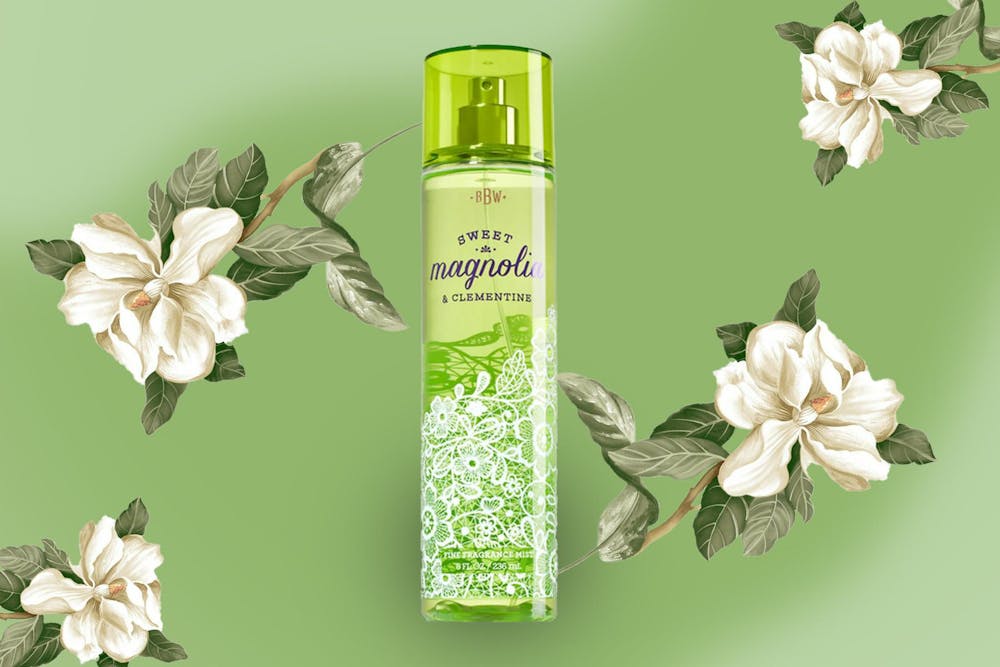
Every morning, before class, I found myself reaching for the long box lined with tubes of perfumes, carefully labelled in braille. Every day I looked forward to discovering a new fragrance. And finally I found her, sweet magnolia. I experienced so much joy at the thought of carrying her rich fragrance on my body. She was mine. I had chosen her, and she was a secret that my body held, invisible to the outsider’s eye.
I found her, and through her, my own idea of beauty.
As a child, I was told that beauty is a label that is placed on you by the eyes of someone who beholds you, your body. I was told that beauty is in the redness of the painted lips, the perfection of the cheeks evened out by foundation and compact. I believed that beauty was everything I couldn’t see.
But today, my understanding of beauty is different. I feel beautiful when I carry sweet magnolia on my skin. I feel beautiful when I hear the music of my anklets, the shimmering chorus of my bangles. I feel beautiful when I confidently stride through campus in my jeans. I feel beautiful when I trace the tiny golden heart on my necklace, when I the sari wrapped around me makes me feel at home in my body. I felt beautiful when I chose to try growing out my hair for a year. I felt beautiful when my hands tied my first ponytail. I feel beautiful when the weight of my hair rests against my collar bone, when my fingers trace the boundaries of its swirling waves.
I still strongly dislike makeup. I think I will always dislike makeup. But I am no longer the young girl who vehemently rebelled against beauty. Because now I know that beauty does not lie in the eyes of the beholder. Now I seek to hold beauty close, because I know that beauty is the confidence, the strength that flows through my veins when I feel at home in my own body.
Hannah Alice Simon was born and raised in Kerala, India, and moved to the U.S. for college with the dream of thriving in an intellectual environment that celebrates people with disabilities. On campus, you will mostly see her taking the longest routes to classrooms with her loyal cane, Riptide, by her side. She studies psychology and English with minors in musical theatre and theology. You can contact Hannah at hsimon2@nd.edu.