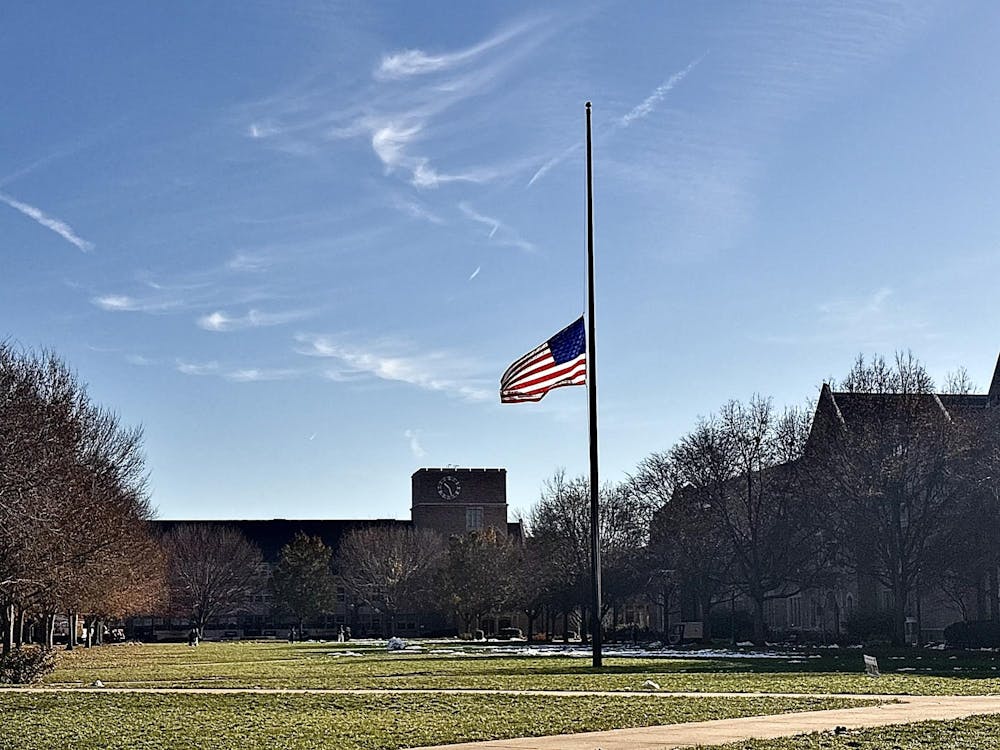
After the longest government shutdown in American history, lasting over 40 days, the United States Senate rallied enough votes Monday to reopen the government. This vote hit the required 60-40 split in favor after eight Democrats broke ranks to vote with all but one Republican in favor of the bill.
The bill then moved to the House of Representatives, which reconvened on Wednesday to pass it by a 222-209 margin. Wednesday night, President Donald Trump signed the bill into law, officially marking the end of the shutdown.
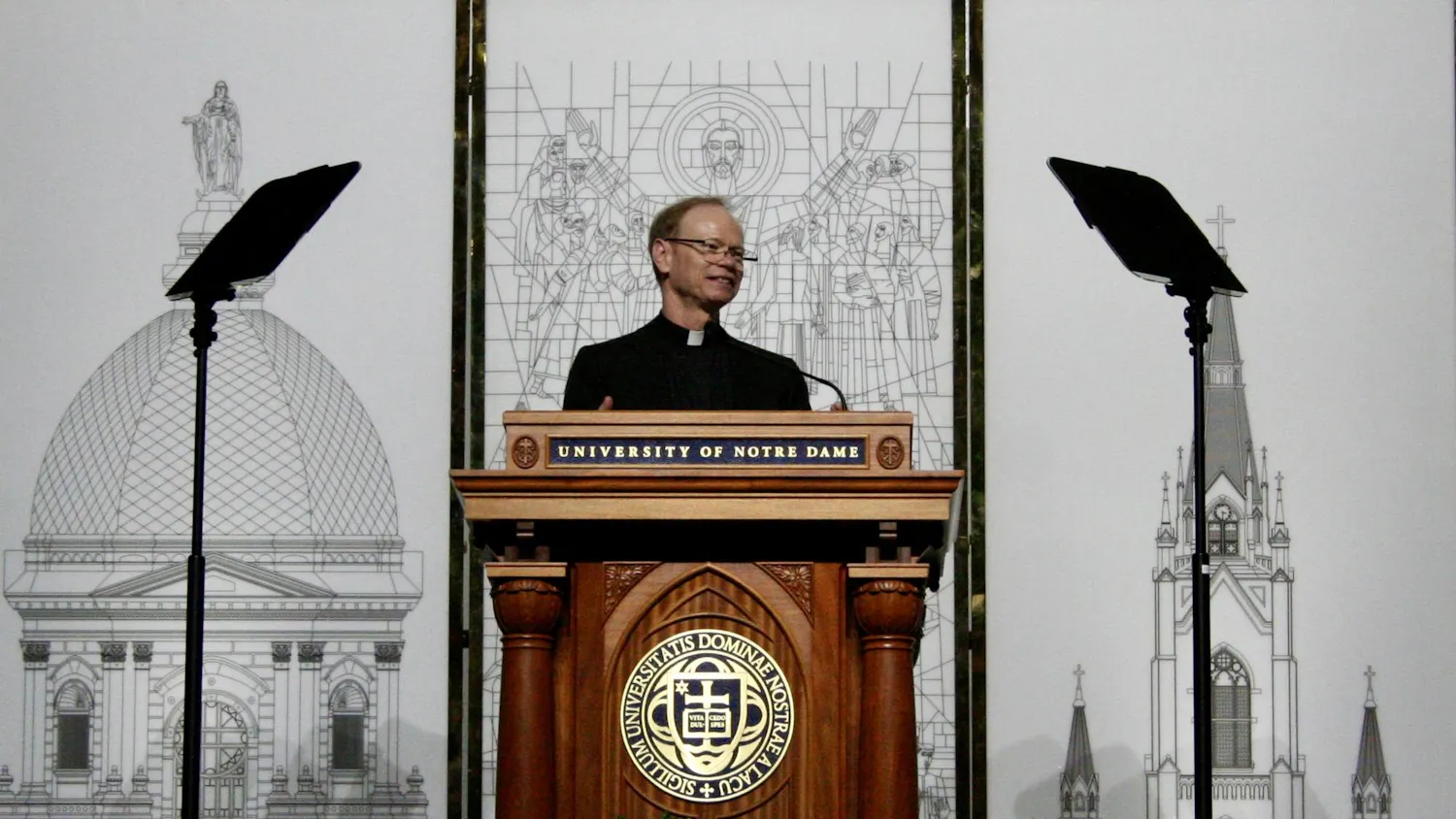
Political science professor James Curry commented on the significance of Democrats breaking ranks, sharing what he sees as a need for bipartisanship within Congress, especially in the Senate.
He explained further that this year’s funding was bound to be a point of conflict, as both parties were eager to make a political point. Curry explained that the longer a government is shut down, the greater the effects are.
“In fact, [federal workers] are the only ones that are immediately affected by the shutdown. But over time, this can spread out to all sorts of other things, where you would need to have disbursements that would have been in appropriations bills, where now the funds have run out, or the disbursements are now due, and those disbursements don't come in,” Curry said.
The shutdown-ending bill
As Curry explained, this bill has several components, but also requires more legislation to pass before some appropriations run out again at the end of January.
“First, it reopens the government by extending funding for most agencies into the end of January. It reverses the layoffs for federal workers that took place during the 43 day shutdown. It guarantees back pay for any workers who were not paid during that time. It blocks any future reductions in force, which is how the White House has been firing people in the federal government through the end of January, and it also includes three full fiscal year 2026 appropriations bills, including the one for legislative bridge functions, agriculture in the FDA and military construction and Veterans Affairs,” Curry said.
Commenting on whether Congress will pass sufficient legislation prior to the end of January or if another shutdown could be on the horizon, Curry said, “I don’t know that they will necessarily get to a full set of appropriations bills before Jan. 30. I think they will get through a lot of them before Jan. 30, but they may end up kicking the can again on some of them. That’s not entirely unusual … I don’t anticipate another shutdown, in part because shutdowns rarely happen in election years.”
Alex Funk, political director of College Democrats, expressed hope that there wouldn’t be further shutdowns. “I'm hopeful that we can keep coming to bipartisan agreements to keep the government open, but you never know. Today's politics are a crazy world,” she said.
Shri Thakur, co-president of College Republicans, had a more pessimistic view. “I think it is possible that after the vote on the subsidies inevitably fails that the Democrats try and shut down the government again. I think they will [en]counter more resistance than they did this time … It would not shock me if we had another shutdown. It would probably surprise me if it went as long as this one,” he said.
Thakur and Curry both pointed out that these bills are very similar to those previously supported by the Democratic party.
“The Democrats were the ones that voted against continuing to fund the government. After 43 days I think you could see that the outcome of that was that nothing really changed. These three fiscal year 2026 appropriations bills actually had previously passed the Senate in August with overwhelming support and probably could have passed in the House a lot sooner without the shutdown,” Curry said.
Nevertheless, Curry did concede that Virginia senator Tim Kaine had successfully gotten some wins for the Democratic party.
Health care subsidies
Notably, this bill did not include anything about passing health care tax credits — a major point of contention and reason Democrats refused to fund the government.
“Essentially, there was a handshake deal between Senate majority leader John Thune and the Democrats who voted to reopen the government that there would be a vote sometime before the end of the year on Affordable Care Act subsidies, but we don't know anything about what that will be. There was no promise from anybody to support the extension of the enhanced subsidies,” Curry explained.
Despite their majority, Curry believes that the Republicans have reason to engage in these conversations.
“I think Republicans in particular would not be thrilled with seeing those enhanced subsidies just expire, because then millions of Americans will see their health care premiums go up, and as the ruling party at the moment, they will be the ones who largely take the blame for that,” he said.
Thakur and Funk were quick to respectively condemn and support these subsidies along their party lines.
“We are not just trying to undo Obamacare because it has the word Obama in it,” Thakur said. “This really isn’t a policy that’s been working.”
Thakur expanded on this idea, explaining that the Affordable Care Act’s tax credits are dependent on having both healthy and sick people in the same insurance market place so that they average out, and argued that there have not been enough healthy individuals participating in these systems for the system to thrive. Thakur said that this lack of balanced participation drives up government subsidies, which in turn drive up insurance premiums in a vicious cycle of ever increasing prices, although he conceded that the health care system needs reform.
Funk, on the other hand, praised Obamacare
“[Obama] did crazy things to lower the uninsured rate, and then Biden went even further with that by enhancing the health care subsidies when he was president. It makes sure that millions could have access to their health care. Without the premium tax credit, millions are expected to not be able to pay their premiums and they are likely going to have to cancel their health care. Health care is a human right, that’s what the Democratic Party believes, and the Affordable Care Act is great,” Funk said.
Curry suggests that a next step on healthcare should be the Republicans talking among themselves to establish what they are willing to support and then taking that proposal to the Democrats.
The filibuster
This shutdown was enabled by a filibuster, which requires a 60-40 majority to pass a cloture prior to needing a simple majority to pass the bill. Recently, the Republican party has discussed removing the filibuster to give more power to the simple majority. Thaker indicated his support for this measure.
Funk echoed the notion that the filibuster as we presently know it needs to be reconsidered.
“Part of the reason that Republicans were very hesitant to weaken the filibuster or get rid of it to end the shutdown is because they understand that Democrats would use that against them when they hold the majority in the future, but I think there is a legitimate conversation to be had about the future of the filibuster, because a lot of the problems that Americans have with Congress is that it seems like it just doesn’t do anything. It’s ineffective, and a lot of that is because of the filibuster,” Funk said.
Blame for the shutdown
Throughout the shutdown, Republicans and Democrats alike traded accusations as to who was to blame for the shutdown. Political clubs on campus were no different.
“I really do think that it is shameful and very unfortunate that the Democrats have really decided to use, you know, the basic ability of families to eat, to put food on the table as leverage in a political fight to save Obamacare and expand healthcare for political aliens,” Thakur said.
Funk indicated her displeasure with both the Democrats who defected and, most of all, the Republicans for the shutdown.
“I am a little upset with these eight Senate Democrats for signing on to this bill, but I also understand that the real party to blame is the Republican Party, because the Republican Party is the party that voted to shut down the government rather than keep Americans’ health care costs low because they would rather increase Americans health care costs dramatically than keep the government open.”
The shutdown as a ‘side show circus’
Curry suggested the shutdown may have been a distraction for the president to expand the power of the executive.
“The shutdown enabled the White House to continue to engage in extra-constitutional actions to either spend money or deny the spending of money in ways that they should not have been able to. The shutdown enabled it, because there was a side show circus going on in Congress, and people were not paying enough attention to what the White House was doing on disbursements,” he said.
What’s to come
This government shutdown enabled the delay of the swearing in of Democratic Arizona representative, Adelita Grijalva, whose special election victory was certified on Oct. 14, but was not sworn into the House until Nov. 12 when the House finally reconvened. Curry said this delay was not unique.
“There's been plenty of other times in American history where the House majority has refused to swear in a duly elected member of Congress for an inappropriate amount of time,” he said.
Thakur said he was in support of the swearing in of Grijalva, as she is a duly elected representative; however he said that this was not an unusual timeline for a special election.
One of Grijalva's first acts once sworn in was to add her signature to the discharge petition to release the files on Jeffrey Epstein. Her vote gave the petition its 218th signature, forcing the House to vote on the issue
“They will take a vote next week that will almost certainly pass the House on releasing these Epstein files, and then it’ll be in the Senate’s hands to decide what to do next,” Curry said.
Funk said she expects the files to be released.
“There are a lot of things that we don't know about Donald Trump and Jeffrey Epstein’s relationship,” Funk said. “I think we're going to get those files and we're going to see some gross things.”
Thakur declined to speculate about the future of legislation surrounding the release of the Epstein files.