
Ever since British Vogue’s “Is Having a Boyfriend Embarrassing Now?,” I’ve noticed a sudden uptick in lifestyle-type, punchy opinion articles in my Instagram ads.
I usually click right through these ads, but recently one caught my eye. The Cut featured an article, “Quit Romanticizing Boredom,” that I couldn’t resist opening. The article, written by novelist Anna North, is written from the perspective of a mother. In her story, she longs for time off in her busy life as a parent to rest and relax, describing a “hospital fantasy” which she describes as one in “which mothers dream about being hospitalized for some minor ailment just to get some respite from the responsibilities and stresses of contemporary parenting.”
Eventually, due to a complication in her pregnancy, the “hospital fantasy” comes true; she spends two weeks on complete bed rest, mostly isolated from her friends and family and unable to go outside or do most of her normal activities.
While I, along with most ND students, am not a mother, I was intrigued by this idea. I too have daydreamed about unforeseen yet mild illnesses or circumstances that would give me an excuse to get out of my daily responsibilities — I think it’s normal to sometimes feel burned out on life.
The more I pondered this idea of romanticized boredom, the more I began to recognize that I might have experienced it before. The first instance that came to mind, of course, was COVID. For the first couple of weeks of quarantine, COVID felt to me like an unbelievable dream come true.
While this is, of course, a privileged position (Many people who were high-risk or had family members who were high-risk were definitely not “excited” about COVID.), I think many people can relate to me. When I was 15, the idea of attending all my classes half-day on Zoom was amazing.
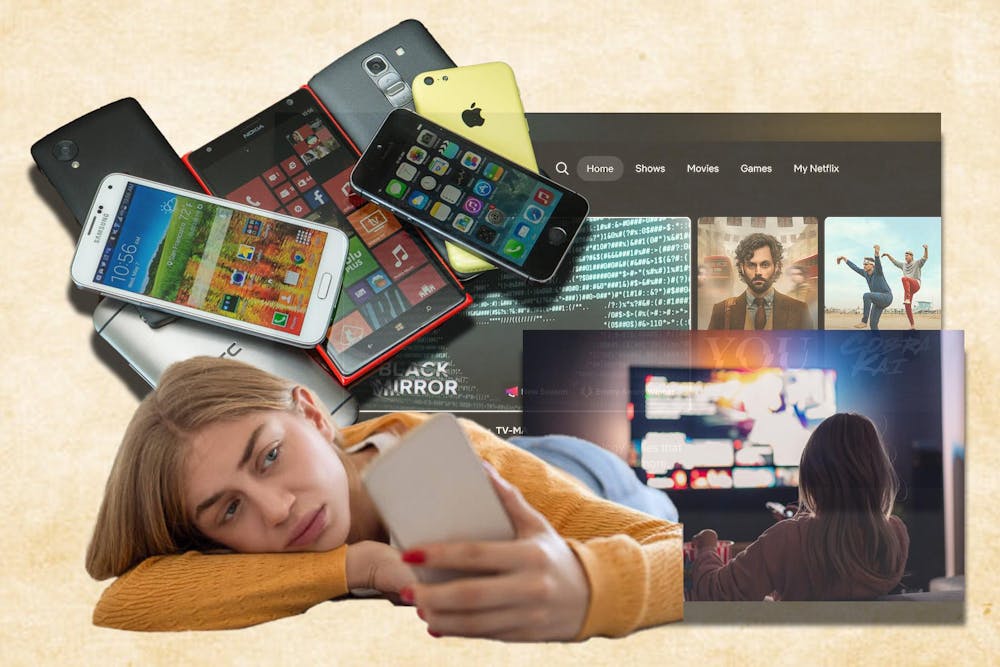
I woke up late every day, took long afternoon naps and binge-watched countless TV shows. It was exactly what I had dreamed of doing for months, and it’s what I often daydream about today. Similar to North’s experience, however, I found that after a couple weeks, isolation and boredom wasn’t so fun anymore. As she puts it, “We’ve forgotten that too much boredom, just like too much stimulation, can kind of destroy your brain.”
A lot of us tend to romanticize the idea of boredom, not only from our academic and work responsibilities but also from our technology; it’s cooler to “be present” than it is to “brain rot” (which I’ve already written about). We idealize time spent without our phones, which we blame for taking away precious boredom time.
Boredom, we claim, fosters problem solving, self-entertainment skills, curiosity about the world and a desire to socialize. We constantly parrot advice for parents to “let kids be bored,” lest they become the dreaded “iPad kid.” We apply this to ourselves as well; we make TikToks on how to live a more “analog” lifestyle and, in general, glamorize the days before technology controlled our daily lives.
While I believe there are benefits to deprioritizing your phone, I also believe that you can always have too much of a good thing.
Just like it’s healthy for us to get outside, interact with the world and challenge ourselves, it can be healthy for us to engage with the world via our devices even while we’re not actively living in it. If we had no technology during COVID, all that boredom wouldn’t have been better without the screen time — we would have been even less social, even less aware of the world around us and even more societally delayed as a result.
Technology can be a distraction, but it is meant to be a tool. As long as you set reasonable limits for yourself (which, hot take, I believe Gen Z and younger are the most capable of due to growing up with technology and actually teaching ourselves how to responsibly use it), it acts as an escape from a world that is arguably more challenged than ever before — and for a college student, who operates in a very stressful and constantly changing environment, it can be a comforting constant.
The truth is that there’s nothing wrong with choosing not to be bored. Rest comes in many forms — if taking time off of your phone sounds restful, then by all means. But for the average person, if Netflix or doom scrolling sounds good after a long day of classes, work or even just socializing, I say, just embrace it.
Sophia Anderson is a junior transfer at Notre Dame studying political science and planning to go to law school. You can contact her at sander38@nd.edu.


