
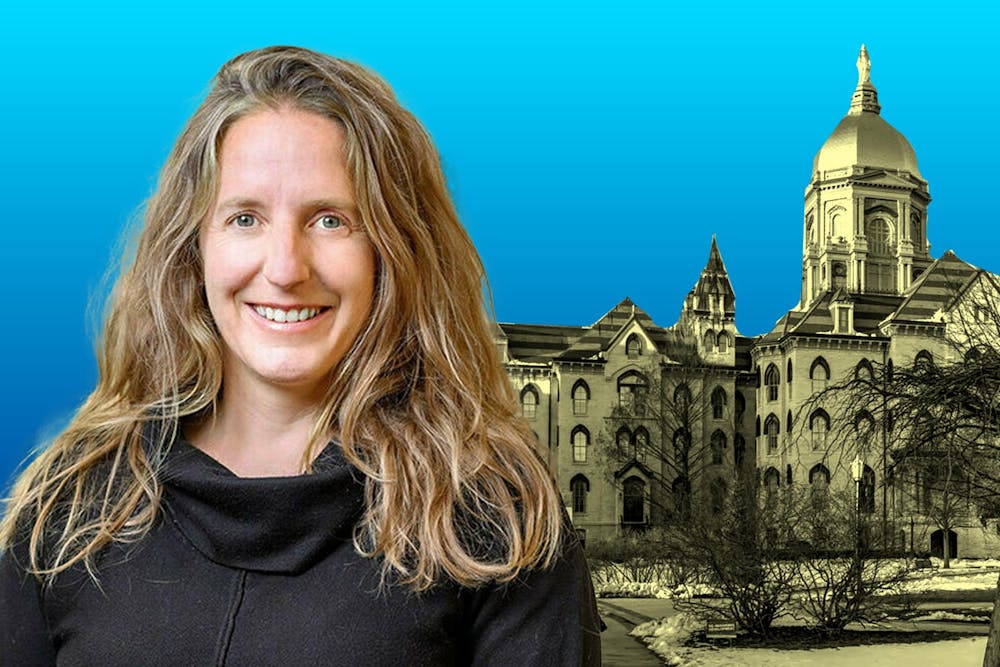
I wouldn’t blame Professor Ostermann if she more strongly (and publicly) supported the right to an abortion as a result of the media circus surrounding her appointment as Director of the Liu Institute. This administrative position does not have room for input from personal politics, nor does much of the professor’s academic work. Her critics wouldn’t know that, as I doubt that any have spoken to her about her beliefs, work or story.
I have.
I did not know she supported the right to have an abortion until well after her guest lectures in my class last semester. She taught topics such as the Nepali caste system. These were decidedly apolitical. In the moment, I learned an enormous amount about a region with which I was previously unfamiliar — including its cultural distinctions. In this moment, it generated questions as to how her new position could really be infiltrated by well-compartmentalized beliefs.
I understand the fairly levied critiques against Ostermann’s beliefs, which have been rebuked by the leadership of the University, faculty and clergy. What I don’t understand is the deeply personal nature of some critiques — including by Fr. Wilson Miscamble in this newspaper. I hoped he would approach this critical moment with humility, rooted in the previous criticism of his own work on the atomic bomb as not being in alignment with Catholic values. This is not the case, as the old drum to protect Catholicism at a visibly Catholic university has been struck again. Ostermann is not a herald of great decline. Her personal politics have already been decried as out of line with the University’s mission years ago. She’s shown a willingness to work with the University to better align with the Catholic mission — a willingness that I imagine is vastly reduced by immense public media hostility.
As a matter of faith, our love of Christ is not defined by how loudly we bang the drum. It is how we treat those for whom we have disdain — in public and in private. Criticism is fair, but lines have been crossed. Every Catholic pundit has jumped on this issue, muddying the waters for people who actually know the major players. Even figures with a national media presence — like Bishop Robert Barron — have also joined onto large sweeping statements. The reality remains that everyone needs to step back and treat each other like human beings. This is not a crusade. This is not a war or a battle. It’s a worthwhile conversation over opposing viewpoints.
Ostermann is a consummate professional, a kind teacher and an informative instructor. The reduction of her character to one belief is something that is decidedly not Christian. A refusal to engage with her beyond statements through the press is a negative look for all of us. You can criticize Professor Ostermann, but you should talk to her in person. Respectfully. Ask questions. Engage. You will find research about regulatory compliance, anti-female genital mutilation law and protecting the dignity of children by outlawing child marriage in the developing world. You will find more common ground than you otherwise would have.
Editor’s note: A previous version of this story was published in draft form. It has since been updated.
Duncan Stangel is a first-year global affairs major at Notre Dame. Currently residing in Alumni Hall (the center of the universe), he hails from the small town of Cumberland, MD. When he's not saving kittens from trees, you can find him stumbling to Debart with a caffeine source in hand. Contact at dstangel@nd.edu.


