As the United States nears its 250th birthday, the University of Notre Dame is reflecting upon the state of American democracy.
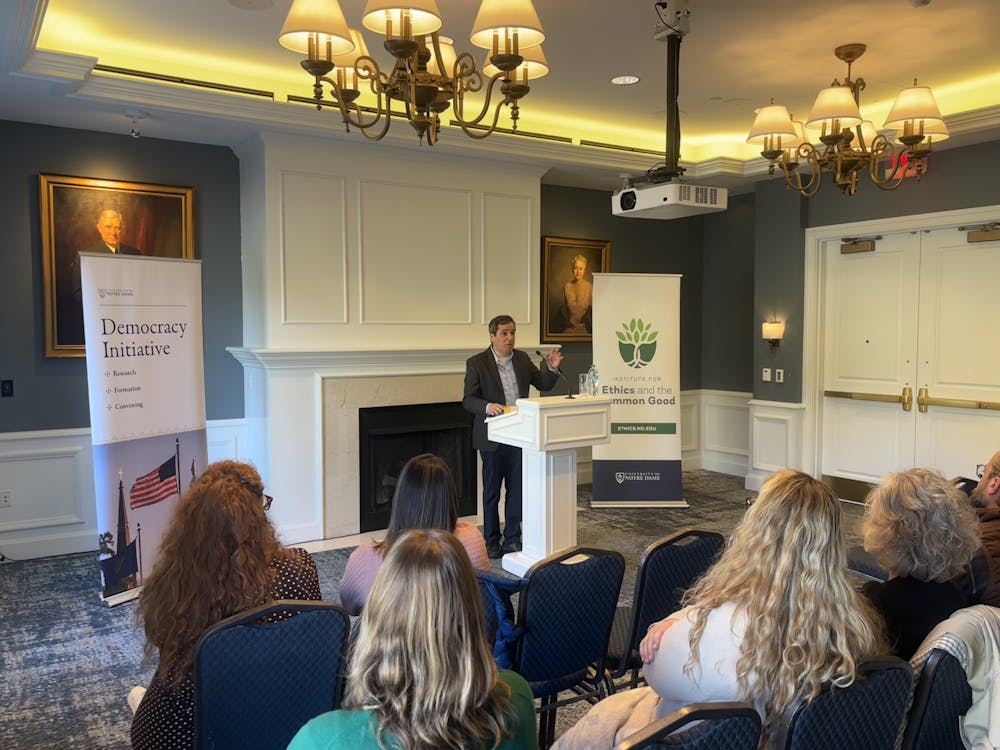
New York Times columnist and journalist Carlos Lozada ’93 delivered a lecture titled “America 250: How Should We Think of Ourselves?” Monday evening in an event co-sponsored by the University’s Democracy Initiative and Institute for Ethics and the Common Good. Lozada, who received the Pulitzer Prize for criticism in 2019, is a former resident of St. Edward’s Hall.
The lecture mainly centered upon author John Jakes’ eight-part historical fiction series “The Kent Family Chronicles.” Published to commemorate America’s bicentennial during the late 1970s, the books follow the Kent family as they live through American history from the Revolutionary War until the late 19th century.
The series begins with Philippe Charboneau, a Frenchman who moves to the United States, changing his name to Philip Kent. Kent and his descendants meet the likes of Benjamin Franklin, John Adams, Paul Revere, Frederick Douglass and Abraham Lincoln, just to name a few. They live through the Boston Tea Party, various battles of the Revolutionary War; sail aboard Old Ironsides; survive the Alamo and Great Chicago Fire; defend the rights of women and immigrants and experience other historic American events.
While it is an entertaining work of historical fiction, Lozada stated that Jakes was also writing about the American identity through the Kents. He emphasized that the series illustrates the concept of America as a choice.
“We aren’t the land of opportunity, or the nation of immigrants, or equal before the law, just because that’s what we say we are,” Lozada said. “We become those things, we remain those things, only if we strive for them without ceasing, and even then nothing is guaranteed.”
He presented the United States as malleable and that it is what we make of it by our actions or images — just as the Kents did.
Phillip’s descendants later reflect upon their family history, burdened by the weight of living up to Phillip’s legacy. Lozada stated that Jakes is analogizing this familial dynamic with the United States’ bicentennial struggle as it reflected upon nearly 250 years of history.
“It’s a harsh description of the weight, the burdensome and essential weight that historical memory places on the people and on the nation,” he said.
When asked by The Observer about how Americans should self-reflect in the current era, Lozada highlighted the need for careful contemplation.
“I think either celebration or cynicism are fine outcomes, if they’re reached through sort of like serious thought and reading and reflection and discussion. I think part of the problem with America’s 250 is too much knee-jerk cynicism or unthinking celebration,” he said.
Lozada also spoke to how college campuses can promote nuanced discourse, stating the cruciality of open discussion that refrains from “preemptively capitulating to any kind of prevailing cultural or political course.”
Universities around the country have different models to promote free speech, with Lozada citing the University of Chicago as particularly successful. Additionally, Lozada noted the importance of curiosity in collegiate environments, stating that learning holds intrinsic value beyond monetary or political gain.
Professor David Campbell, director of the Notre Dame Democracy Initiative, detailed the University’s efforts to quell political polarization and address American democracy on campus and in the classrooms through a written statement to The Observer.
“Nearly every course taught in Political Science and the Keough School touches on democracy in some way, but so do courses in many other departments,” he wrote.
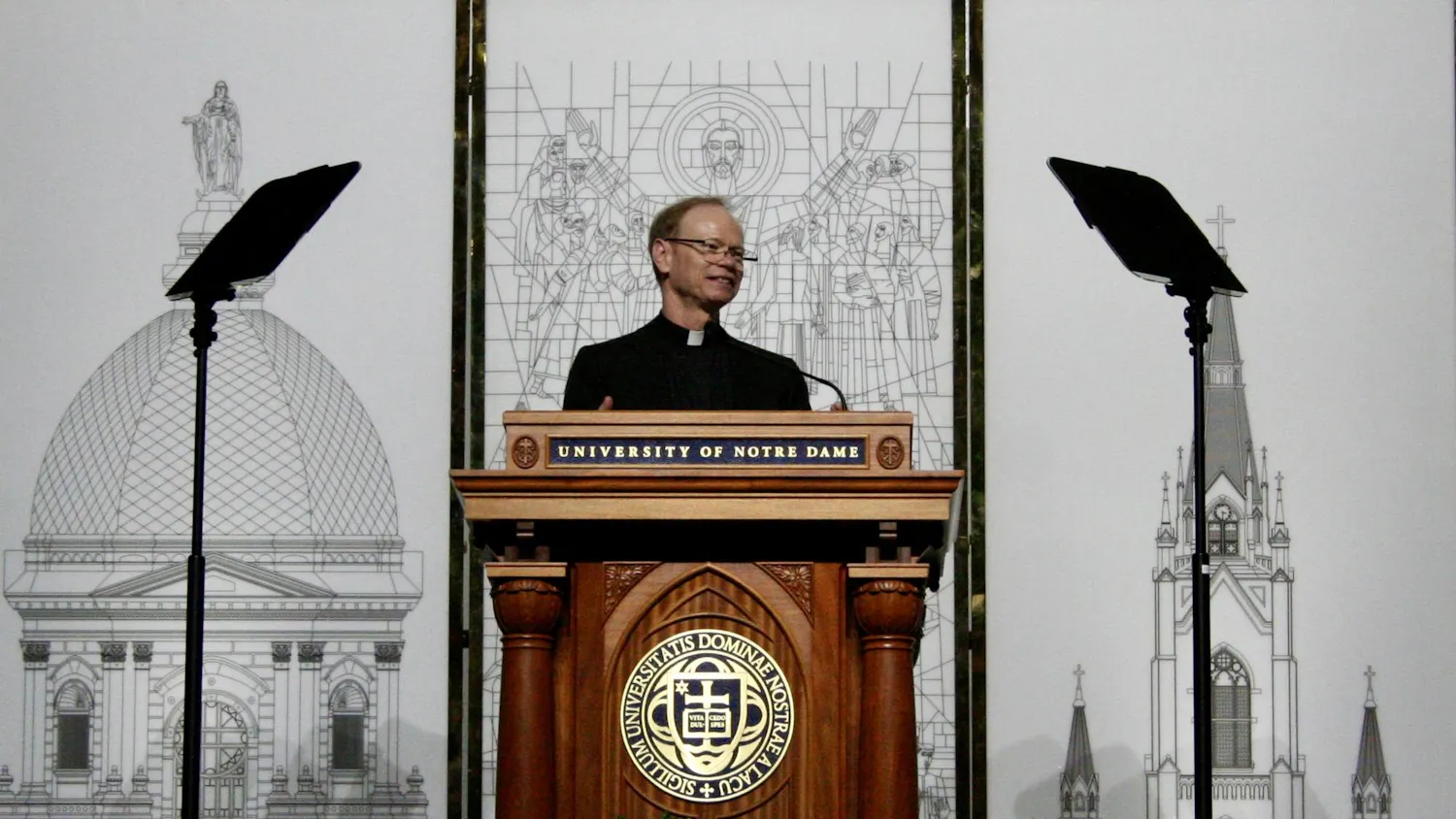
The University’s efforts stretch beyond the classroom as well. Last fall, the Democracy Initiative hosted Utah Gov. Spencer Cox and New Mexico Gov. Michelle Lujan Grusham in a dialogue moderated by University President Fr. Robert Dowd.
Regarding future programming surrounding the nation’s semiquincentennial, Campbell stated that more events are in the works. He hopes that these would provide the need for unity on campus in combating political polarization.
“I would hope that every student’s experience at Notre Dame, whether they are Americans or not, will teach them that what unites us is greater than what divides us,” Campbell wrote. “America is a polarized nation, to be sure, but history teaches us that it is possible to transcend polarization. However, it does not happen automatically. It requires people of goodwill focusing not only on ‘pluribus’ but also remembering the importance of ‘unum.’”