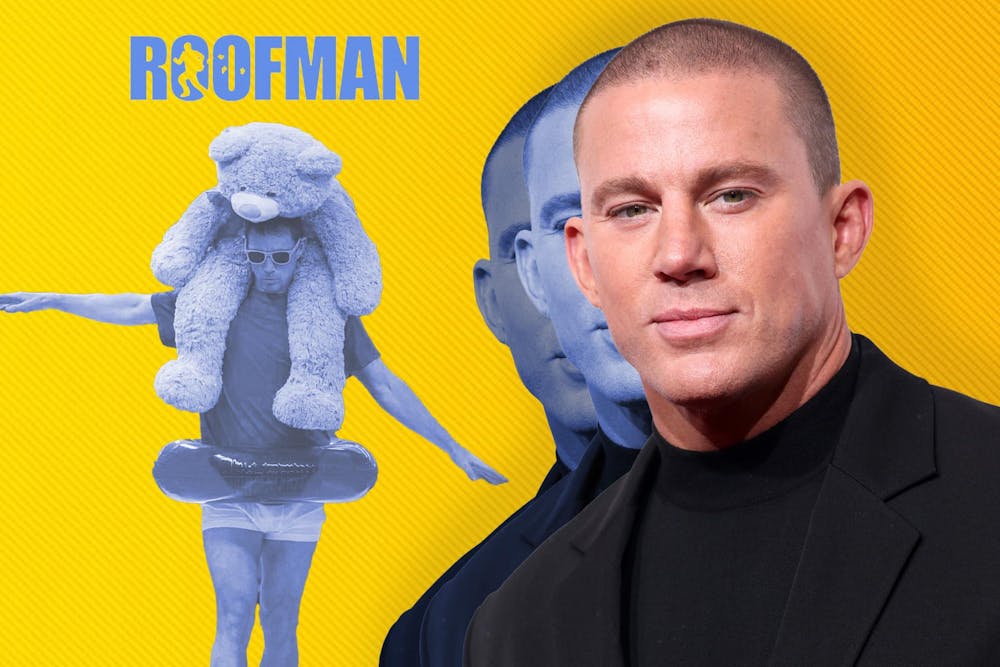
Over the past few years, true crime has held a firm grip on the American entertainment industry. Recent documentaries like “American Murder,” Netflix series such as “Monster” and other pieces of true crime media have left the public desperate for more. And now Derek Cianfrance’s “Roofman” has become this genre’s newest addition.
This biopic, starring Channing Tatum, tells the story of “nice guy” robber Jeffrey Manchester. The film details Manchester’s rooftop McDonald’s robberies, which land him a 45-year prison sentence. Manchester, an army veteran who was regarded by other characters as a tactical genius, quickly escapes prison and hides out in a Toys R Us where he falls for Leigh, a recently divorced Toys R Us employee.
Shortly after, Manchester begins integrating himself into her life, attending her church and getting close to her family. The depiction of Manchester’s crimes combined with his romance with Leigh creates a true crime-romcom hybrid.
As a film, “Roofman” is perfectly adequate. Its mixture of comedic scenes and heartbreaking ones keeps the audience engaged throughout the entire movie. The dialogue sounded natural, and I greatly enjoyed the soundtrack. Additionally, the portrayal of relationships in this film was noteworthy. I was impressed by the believability of Manchester’s relationship with Leigh and his relationship with Leigh’s daughters. While watching this movie in theaters, I must admit that I enjoyed it.
However, the enjoyable cinematic elements of this film are overshadowed by its overall message. “Roofman” makes light of the heinous crimes committed by Jeffrey Manchester and even glamorizes them.
In case you’re unaware of the nature of Manchester’s crimes, he was sentenced to 45 years in prison in 2000 after committing upwards of 50 robberies at McDonald’s and other fast-food restaurants. He was often armed and would force restaurant employees into freezers while he robbed their place of work. Manchester ran from the police when they attempted to arrest him and then escaped from prison after being incarcerated, demonstrating his flagrant lack of remorse for the crimes he committed. Evidently, Jeffrey Manchester is not a person to be celebrated.
However, “Roofman” does just this: celebrates a criminal. Complimented by Channing Tatum’s naturally warm and likable persona, the character of Jeffrey Manchester in “Roofman” is hard for audiences not to like. He’s presented as some sort of loveable genius, and his cinematic escape from prison is portrayed as a great feat. Furthermore, the way that Manchester is characterized causes the audience to feel sympathetic for this man, despite the undeniable harm that he has caused to multiple people.
This film not only turns a criminal into a hero, but it also neglects Manchester’s victims. Although he was labeled a “nice guy” by some, that doesn’t erase the fact that he committed multiple armed robberies that negatively impacted the well-being of many. This movie liberates Manchester from any accountability.
Coupled with the recent influx of true crime media, there’s been a growing trend to glamorize and even praise criminals. This is especially prevalent on social media platforms like TikTok, where popular true crime documentaries and series inspire creators to make content romanticizing serial killers and other dangerous criminals. However, unlike other recent true crime media, “Roofman’s” adulation of crime is deliberate. It is apparent that this film was intended to be lighthearted and unserious from its conception — it was even marketed as a comedy film. The creators of this film have a blatant disregard for the very real impact of Manchester’s crimes.
As a film, “Roofman” was entertaining, and if it had been based on a fictitious crime, the film’s comedic tone would be justifiable. However, Cianfrance’s humorous portrayal of these crimes exonerates Manchester of all accountability and dehumanizes his victims. Instead of condemning the unpardonable acts of Jeffrey Manchester, “Roofman” celebrates a criminal.