What does an “intellectual life” look like at Notre Dame? How do we students live a life devoted to learning and truth in the midst of a demanding course load, a chaotic schedule, a vibrant social life and professional pressures to succeed and to achieve?
I am not the only one asking these questions.
Notre Dame senior Erica Dowd recently wrote a column titled “Leave learning alone,” in which she expresses the desire that “the value of learning is not compromised” in the modern university. Dowd’s column expresses the conflict between the practicality of obtaining a degree to secure a job and the ideal of living an intellectual life at Notre Dame.
St. Mary’s freshman Sienna Stephens recently wrote a column titled “Spend more time alone,” in which she articulates the value of solitude in a campus culture that tends to look down upon alone time as “being on the sidelines.” Stephens’ column explores the conflict between living a bustling social life and pursuing a quiet, contemplative intellectual life in this tri-campus community.
English graduate student Oliver Ortega recently wrote a column titled “In the trenches: Surviving Hesburgh Library’s dissertation boot camp,” in which he reflects on the grueling process of writing his dissertation and wonders, “Was it intellectual curiosity or intellectual masochism that put me on the Ph.D. path?” Ortega’s column expresses the conflict between living the disciplined and highly structured “academic life” and living the free and creative intellectual life at Notre Dame.
Professor of Philosophy Paul Blaschko recently wrote an article titled “Creating a Culture of Virtuous Leisure in a World of Total Work,” in which he attempts to answer the question (originally posed by one of his students), “What does leisure look like today?” Blaschko notes that many of the models of living an intellectual life (or a life that cultivates “virtuous leisure”) are outdated and not suitable for Notre Dame’s environment (e.g., “ancient symposia, 18th-century salons, or even monastic rules of life”). Blaschko then describes Notre Dame’s Sheedy Family Program in Economy, Enterprise, and Society (SFP), which explores the relationship between business and the liberal arts, as a community and a curriculum at Notre Dame that successfully cultivates virtuous leisure. For Blaschko, SFP — with its “competitions, academic workshops and lightly structured late-night dialogues around a campfire on the shores of Lake Michigan” and its “three-hour dialogues over dinner each month in a room that looks like we’re on the set for ‘Harry Potter’ or ‘Downton Abbey’” — successfully “integrate[s] the life action with the life of contemplation through dialogue.”
I do not think Blaschko’s answer is quite right. A community and curriculum like the SFP may succeed in dissolving the conflict between practicality and liberality expressed by Dowd by integrating business and the liberal arts. It may succeed in dissolving the conflict between gregariousness and solitude expressed by Stephens by promoting independent learning integrated with communal discussion. It may succeed in avoiding the conflict between the grueling labors of academic life and the curiosity and creativity of intellectual life expressed by Ortega. However, programs like SFP ultimately cannot foster intellectual life long-term. The more the Notre Dame student relies on programs, curricula and, to some extent, even communities to structure his or her intellectual life, the more the student will fail to develop the personal habits necessary to live an intellectual life.
In one of my classes, we recently discussed a classic book on this subject, “The Intellectual Life" by French Dominican A.G. Sertillanges (1863-1948). The angle that my professor and many of the students took was that Notre Dame needs to ease off its rigorous academic requirements and work toward fostering a culture of leisure. Sounds good to me. But in my opinion, so long as we students look to Notre Dame to live the intellectual life for us, we will fail to live it ourselves.
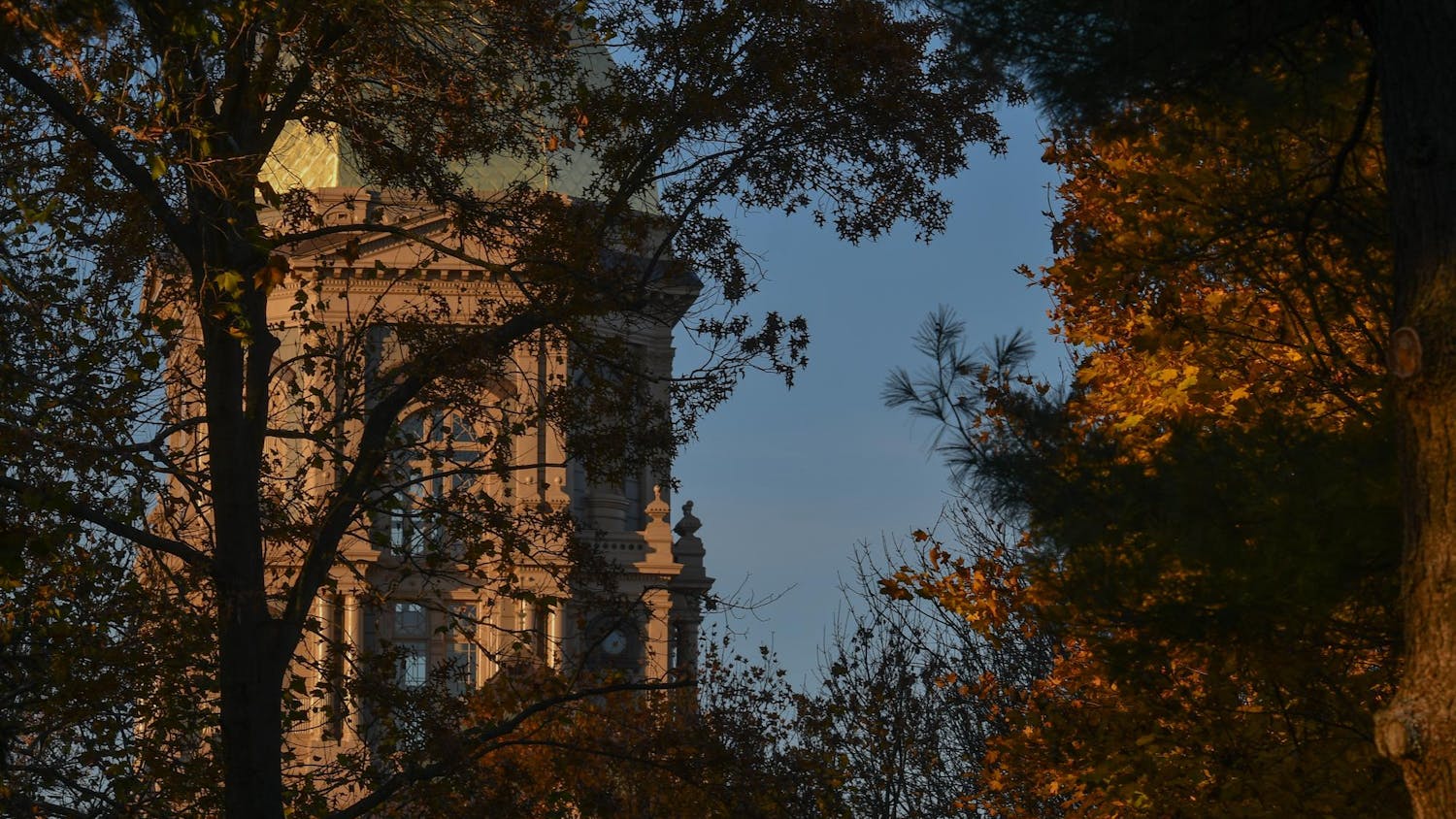
We cannot live the intellectual life by adding another minor, applying for another major or joining another club. Neither do we need to engage in more “academic workshops” or dine in “a room that looks like we’re on the set for ‘Harry Potter’ or ‘Downton Abbey.’” We only need to, after a long day of coursework, in the silence of our own cinderblock dorm rooms at our reused desks, take a peek inside a worn-out library book for no other purpose than to satisfy our curiosity. We only need to, on the walk between classes, jot down a note on a cracked iPhone screen about an interesting thought we just had or admire the sun shining through colorful autumn leaves through smudged glasses. We only need to, while getting lunch with a friend and overheating in South Dining Hall, raise a question about faith or the economy (or even some other far more trivial topic) and stumble together toward an answer.
The pedagogue has the impossible task of getting students to do something only they can do for themselves. Designing programs and curricula to create a culture that fosters the intellectual life at Notre Dame is a noble endeavor that addresses a real problem with our current “achievement” culture. However, this is a cultural change that can only be effected from the bottom up — from the free wills of curious individuals choosing to value truth, driven by the joy of knowing, in the leftover time in their schedules and in conversations with their friends.
Richard Taylor is a senior from St. Louis living in Keenan Hall. He studies physics and also has an interest in theology. He encourages all readers to send reactions, reflections or refutations to rtaylo23@nd.edu.